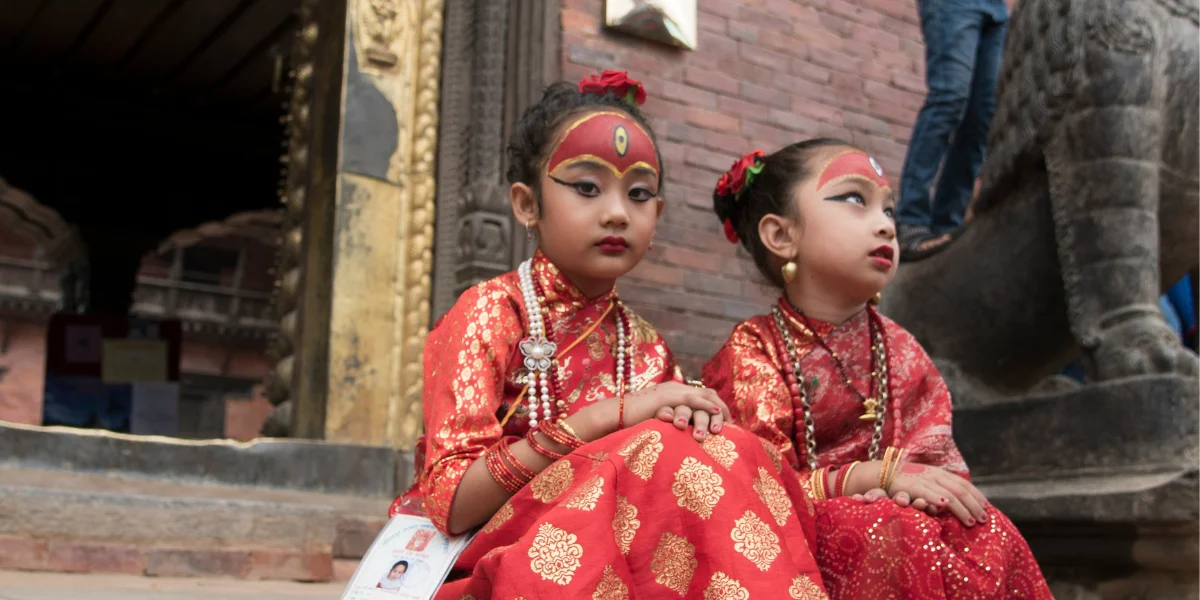
Nepal is a land of ancient traditions, deep spirituality, and vibrant culture. One of its most fascinating traditions is the worship of the Kumari, the Living Goddess. Revered by both Hindus and Buddhists, the
Kumari is believed to be the human incarnation of Goddess Taleju, the goddess of power, protection, and divine energy. She is a symbol of purity, divine blessings, and cultural heritage in Nepal.
Who is the Kumari?
The Kumari is a young girl chosen to serve as the living goddess of Nepal. She lives in the Kumari Ghar, a palace in Kathmandu Durbar Square, and appears publicly only on special festivals and ceremonies. Devotees seek her blessings for good health, success, and protection from evil.
Family Background of the Kumari
Traditionally, the Kumari must be a girl from the Shakya or Bajracharya Newar Buddhist community. These families are highly respected and have a long history of involvement in religious and cultural rituals. The girl must be born into a pure and respectable family with no history of major illnesses or misfortunes.
When is the Kumari Selected?
The selection of a Kumari is done carefully and usually happens after a Kumari retires upon reaching puberty. The process is carried out on an auspicious day, chosen according to Nepali astrology and the lunar calendar. The priests, astrologers, and elders ensure that the timing is perfect to maintain spiritual harmony.
The 32 Perfections of a Kumari
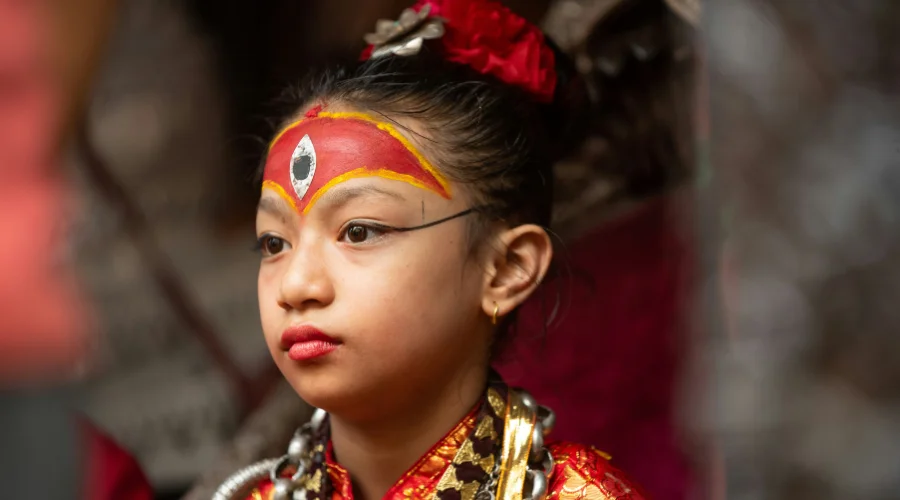
The Kumari must meet 32 physical, spiritual, and behavioral perfections to be considered worthy of goddess status. These include:
- Dimpled chin
- Thick hair
- Fair and glowing skin
- Long eyelashes
- Long and sharp nails
- Straight teeth
- Red lips
- Well-shaped eyebrows
- Clear and bright eyes
- Full cheeks
- Even teeth alignment
- Beautiful nose
- Well-formed ears
- Symmetrical face
- No scars or blemishes
- Long fingers
- Soft and delicate hands
- Small waist
- Well-shaped legs
- Delicate arms
- Perfect posture
- Height appropriate to age
- Graceful walk
- No deformities
- Gentle and calm temperament
- Courageous nature
- Fearlessness toward snakes or skeletons
- Strong memory and intelligence
- Polite and respectful behavior
- Strong spiritual connection
- Ability to perform rituals properly
- Astrological alignment with Goddess Taleju
How is the Kumari Selected?
The selection process is elaborate and sacred:
- Candidate Identification: Girls from Shakya or Bajracharya Newar families, aged 3–5 years, are considered.
- Physical Inspection: Priests examine the girl’s body and features for the 32 perfections.
- Astrological Test: Her horoscope is checked to confirm spiritual suitability.
- Courage Test: The girl is exposed to frightening objects like skulls or snakes. If she shows no fear, she passes the test.
- Final Ritual Selection: After passing all tests, the girl is officially declared the Kumari on an auspicious day, following ancient rituals. She then begins her life in the Kumari Ghar as the living goddess.
Beliefs of Locals Regarding Kumari
The Kumari is not just a living goddess but also a symbol of divine power and protection in Nepal. Over centuries, locals have developed several beliefs and traditions surrounding her presence:
- Kumari Cannot Smile or Cry Publicly: It is believed that if the Kumari smiles or cries openly, it could bring misfortune, disasters, or bad luck to the country.
- Blessings Bring Prosperity: People believe that merely seeing or bowing to the Kumari can bring good luck, health, and prosperity.
- Avoid Touching Without Permission: Devotees must not touch the Kumari casually; she is considered a sacred goddess in human form.
- She Protects the City: The Kumari is believed to protect Kathmandu and the surrounding regions from evil spirits and disasters.
- Festival Miracles: During festivals like Indra Jatra, locals trust that her appearance ensures happiness and peace in the community.
- Omens in Her Behavior: Her mood, expressions, or gestures are sometimes seen as omens for the country or royal family.
Life of the Kumari
Once chosen, the Kumari leads a highly disciplined and ritual-filled life:
- She is trained in rituals, prayers, dances, and cultural ceremonies.
- She remains mostly inside the palace, appearing publicly only on special occasions such as Indra Jatra and Dashain rituals.
- The Kumari does not walk barefoot outside and must maintain her divine purity at all times.
- She continues as Kumari until reaching puberty, after which a new Kumari is chosen.
Interesting Facts About Kumari
The Kumari tradition is full of unique and fascinating details that make it one of Nepal’s most intriguing cultural treasures. Here are some interesting facts:
- The Kumari is considered the living incarnation of Goddess Taleju, worshipped by both Hindus and Buddhists.
- She is selected at a very young age, usually between 3 to 5 years old.
- The Kumari lives in the Kumari Ghar in Kathmandu and rarely leaves except for religious festivals.
- Her selection is based on 32 perfections, including physical features, courage, and astrological alignment.
- She does not walk barefoot outside the palace to maintain her divine purity.
- During Indra Jatra, she appears on a chariot to bless the public.
- People believe that seeing or bowing to her brings good luck and prosperity.
- Her mood and expressions are considered omens, and smiling or crying publicly is thought to bring misfortune.
- The tradition of Kumari exists in Kathmandu, Patan, and Bhaktapur, each with their own palace and rituals.
- A retired Kumari can return to a normal life, continue education, and even marry after puberty.
Significance of the Kumari
The Kumari is more than a tradition; she embodies spiritual purity, divine energy, and Nepali cultural heritage. Her presence is believed to bring health, luck, and protection. She also serves as a living link between ancient Nepali rituals and modern society, preserving the spiritual history of Nepal.
Festivals and Public Appearances
- Indra Jatra: The most famous festival, where the Kumari is placed on a chariot and taken through the streets of Kathmandu to bless the people.
- Dashain: During this festival, devotees visit the Kumari to receive blessings for prosperity and protection.
- Special Blessing Days: Certain lunar dates and astrological events are considered auspicious for Kumari blessings.
Frequently Asked Questions (FAQs)
1. How long does a girl remain as Kumari?
Until she reaches puberty (around 12–13 years old).
2. Which families can the Kumari belong to?
She must come from Shakya or Bajracharya Newar Buddhist families.
3. What tests does the Kumari go through?
Physical inspection, astrological verification, and courage tests with frightening objects.
4. Can anyone touch the Kumari?
Only during certain rituals or festivals. Otherwise, devotees bow or offer gifts.
5. What happens after a Kumari retires?
She can live a normal life, continue education, and even marry.
6. Are there Kumaris outside Kathmandu?
Yes, smaller Kumari traditions exist in Patan and Bhaktapur.
7. Why is she worshipped by both Hindus and Buddhists?
She is a symbol of divine energy that transcends religious boundaries.
Conclusion
The Kumari is a unique symbol of Nepal’s cultural and spiritual richness. From her careful selection from respected families to her life as a living goddess, she represents purity, courage, and divine energy. Visiting Kathmandu to witness the Kumari is a rare experience that showcases the deep spiritual heart of Nepal.