Is Mount Everest really covered in poop? This question may sound shocking, but it is one of the most searched topics about the world’s highest mountain. Every year, hundreds of climbers and support staff spend weeks on Mount Everest.
During this time, human waste becomes a serious issue. Due to extreme cold and lack of proper disposal systems at high altitude, poop does not decompose easily. As a result, much of it stays frozen on the mountain for years.
Mount Everest’s poop problem is not just an unpleasant topic. It is a growing environmental concern. From Base Camp to higher camps, climbers must deal with where to pee and poop in harsh conditions.
Over time, unmanaged human waste has added to Everest’s trash problem. In this article, we will explain where people poop on Mount Everest, what happens to human waste, and why this issue needs urgent attention.
Does Mount Everest Have a Poop Problem?
Yes, Mount Everest does have a real and serious poop problem. This is not a rumor or an exaggeration. With more than 800 climbers attempting the summit each year, along with guides and support staff, a large amount of human waste is left behind.
Many climbers ask, does Mount Everest have a lot of poop? The honest answer is yes, especially in popular areas like Everest Base Camp and higher camps.
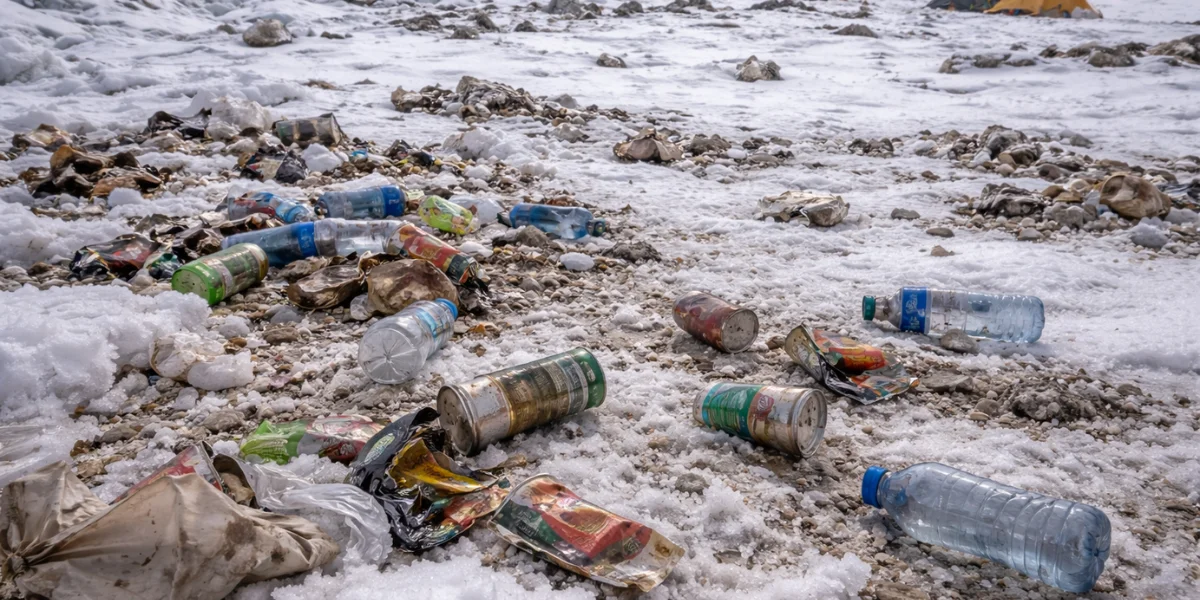
At high altitude, the ground is frozen most of the year. Because of this, poop does not break down naturally. Instead, it freezes and stays on the mountain. Over time, this has created what many people describe as Mount Everest frozen poop. Some areas even have visible piles of human waste mixed with snow and ice.
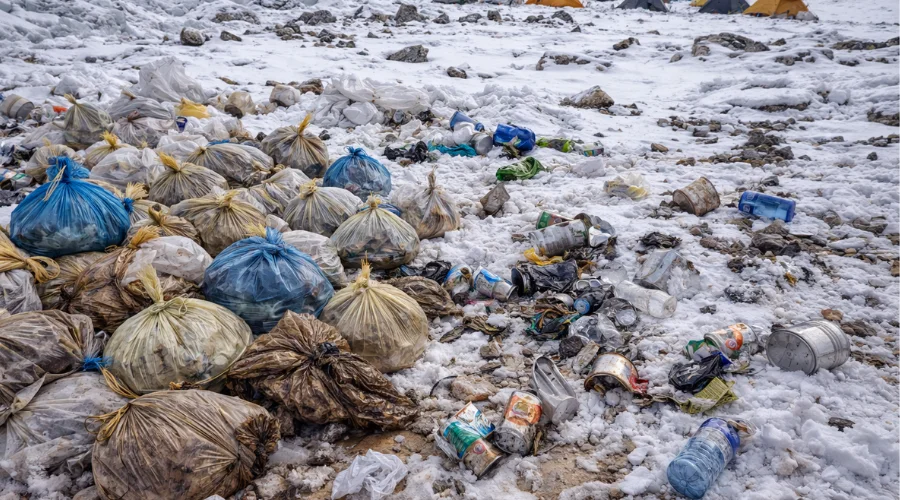
So, is Mount Everest covered in poop? Not everywhere, but in heavily used climbing zones, human waste is clearly present. This is why many experts say Mount Everest has a poop problem that can no longer be ignored. The issue is worse during peak climbing season when hundreds of people use the same camps at the same time.
This growing Mount Everest poop issue is one of the main reasons why Nepal has introduced strict waste management rules in recent years.
How Much Poop Is on Mount Everest?
So, how much poop is actually on Mount Everest? While no one can give an exact figure, experts and cleanup authorities agree on one thing: the amount is measured in tons, not kilograms.
Based on seasonal climbing data and waste collection reports, climbers and support staff produce around 12 to 14 tons (12,000–14,000 kg) of human waste every climbing season. This includes feces left at Base Camp and higher camps where decomposition is almost impossible due to freezing temperatures.
Over the years, cleanup campaigns have removed a significant amount of waste, but not all of it. On average, only about 5 to 6 tons of human waste are successfully collected and taken down from Everest each year.
That means several tons remain on the mountain, especially in higher camps like Camp II, Camp III, and Camp IV. Authorities estimate that at least 3 to 5 tons of frozen human poop is still scattered across these upper sections.
When people ask how much poop is on Everest in total, the long-term estimate becomes even more concerning. Considering decades of climbing before strict rules were enforced, experts believe that over 30 tons of human waste may still be buried under snow, trapped in ice, or exposed on rocky sections of the mountain. As glaciers melt due to climate change, some of this old waste is now resurfacing, which adds to the ongoing Mount Everest poop problem.
This is why human waste on Mount Everest is no longer just a climber issue. It has become an environmental and health concern that Nepal is actively trying to manage through stricter poop laws, mandatory poop bags, and regular cleanup missions.
Mount Everest Poop Collection, Cleanup Efforts, and Poop Bags
To control the growing Mount Everest poop problem, Nepal has introduced strict waste management rules. Climbers are now required to carry their poop back down from higher camps. This applies to all climbers, guides, and support staff. Ignoring these rules can result in fines or loss of climbing permits under the Mount Everest poop law.
At Everest Base Camp, human waste is collected using barrel toilets. These barrels are sealed and transported to lower villages for proper disposal, reducing open defecation at Base Camp. Above Base Camp, climbers must use Mount Everest poop bags to safely store waste in freezing conditions.
Cleanup teams, often led by local Sherpas, remove tons of trash and frozen poop each season. However, waste removal from higher camps is slow and risky due to thin air, harsh weather, and difficult terrain, leaving some frozen waste still on the mountain.
Cost and Use of Poop Bags
Biodegradable poop bags are mandatory above Base Camp. Climbers can buy them locally if they do not bring their own. Each bag costs around NPR 580 ($4–5) and contains chemical powder that solidifies waste and reduces odor. Expeditions usually carry multiple bags per person to last the entire climb. Failure to return used bags can affect environmental deposits and garbage certificates.
Using poop bags is crucial. They prevent human waste from being left behind, where it can stay frozen for years and threaten water sources. Though the cost is small compared to climbing fees, these bags play a vital role in protecting Everest’s fragile environment and managing the long-standing Mount Everest poop problem.
Poop Slides and Avalanches on Mount Everest
One of the most unusual and shocking aspects of Mount Everest’s waste problem is the phenomenon called poop slides. On steep slopes, frozen human waste can sometimes break free, sliding down with snow or ice. These incidents are rare, but when they happen, they create what climbers and locals call a poop avalanche. Over the years, some of these slides have even exposed old frozen waste that was buried for decades.
Climbers and trekkers often ask, are there poop slides on Mount Everest? The answer is yes, mostly on steep sections above Camp II and Camp III where waste has accumulated over years. When ice shifts or snow melts, the frozen piles can move downhill, mixing with debris and sometimes reaching trekking paths. These slides are a reminder of how serious the Mount Everest poop problem has become.
Despite sounding gross, poop slides highlight an important environmental reality: human waste does not disappear on Everest. Freezing temperatures preserve it for years, and melting glaciers or shifting ice can release it suddenly. This makes proper waste collection and poop bag use even more critical for climbers.
While photos and videos of these slides occasionally appear online, most are shared on Reddit or climbing forums to raise awareness rather than for sensationalism. Authorities and cleanup teams treat these slides as environmental hazards, emphasizing that preventing waste accumulation is far safer than dealing with sudden exposure of frozen human poop.
How Do People Poop on Mount Everest?
Many people wonder, how do people poop on Mount Everest when there are no proper toilets at extreme altitude. The reality is very different from normal trekking routes. Above Everest Base Camp, there are no permanent bathrooms. Climbers must manage human waste in very basic and controlled ways.
At Everest Base Camp, temporary toilets are set up during the climbing season. These are usually barrel or drum toilets. The waste collected here is later carried down for proper disposal. This system helps reduce the Everest poop problem at Base Camp, but it does not fully solve it.
Higher up the mountain, climbers use special Mount Everest poop bags. These bags are designed to collect human waste and seal it safely. Climbers are required to carry these bags back down. However, in the past, many people ignored this rule. That is one reason why there is so much human poop on Mount Everest today.
So, where do climbers poop on Mount Everest at higher camps? Most do it inside tents or behind rocks using poop bags. Pee is usually done on snow, but poop must be packed out. This practice is now mandatory under Mount Everest poop law, and climbers can face fines if they fail to follow it.
Understanding how climbers poop on Mount Everest helps explain why waste management is such a big challenge in extreme conditions.
What Happens to Human Waste on Mount Everest?
A common question is, what happens to human waste on Mount Everest? Due to extreme cold, most poop does not decompose. Instead, it freezes almost instantly. This is why people often talk about Mount Everest frozen poop and frozen piles of poop on Everest.
At lower elevations, waste can slowly break down. But above Base Camp, temperatures stay below freezing for most of the year. As a result, poop left on the mountain can remain there for decades. This is one reason why experts estimate that thousands of kilograms of human waste are still on Mount Everest.
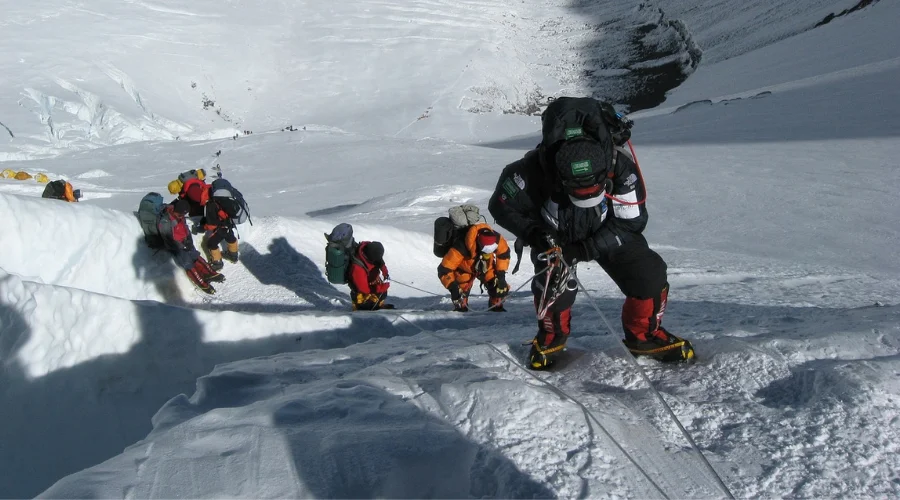
Many people ask, how much poop is on Mount Everest? While there is no exact number, reports suggest that several tons of human waste have accumulated over the years. This includes waste buried under snow, trapped in ice, or exposed during glacier movement.
When ice melts due to climate change, old waste starts to resurface. This creates health risks and pollutes nearby water sources. This is why the Mount Everest poop problem is now considered an environmental threat, not just a cleanliness issue.
So, what happens if you poop on Mount Everest and do not remove it? The waste stays there, frozen, until natural ice movement or cleanup teams bring it down. This explains why managing human waste on Mount Everest has become a major priority in recent years.
FAQs
Yes and it’s bigger than most people imagine! Thousands of climbers leave behind human waste every year. Because it freezes in the extreme cold, poop can stay on the mountain for decades, creating a serious environmental problem.
The freezing temperatures above Base Camp stop bacteria from breaking down waste. This means that poop, urine, and toilet paper can remain frozen in snow and ice for years, slowly piling up with each climbing season.
At Base Camp, climbers use barrels or toilet tents. Above Base Camp, it’s more extreme: climbers either use specialized poop bags or dig in snow behind rocks. Every climber is now required to carry their waste back down to prevent further pollution.
These are biodegradable bags filled with a chemical powder that solidifies waste and reduces odor. They make it possible for climbers to safely store human waste at freezing temperatures and carry it down the mountain.
Climbers often need three or more poop bags per expedition, depending on how long they stay on the mountain. Each bag is carefully packed out, because leaving even one behind is against the rules.
It’s shocking: tens of thousands of pounds of human poop and urine are generated each season. Even with cleanup efforts, several tons remain frozen in higher camps, slowly adding to Everest’s long-standing waste problem.
Waste collected at Base Camp is transported down to lower villages for proper disposal. Higher camps rely entirely on climbers to carry their poop down in bags – no one wants frozen poop sliding down the mountain uncontrolled!
Yes. Nepal has made it mandatory for all climbers to pack out their human waste. Ignoring this rule can result in fines, loss of climbing permits, or confiscation of environmental deposits.
Absolutely. Melted snow can carry human waste into rivers and streams, which local communities depend on for drinking and farming. That’s one reason proper waste management is so critical.
Leaving waste behind is not just illegal; it’s dangerous for the environment. Frozen poop left on the mountain can resurface during snowmelt, creating health risks and contributing to the infamous poop slides that sometimes occur on steep slopes.