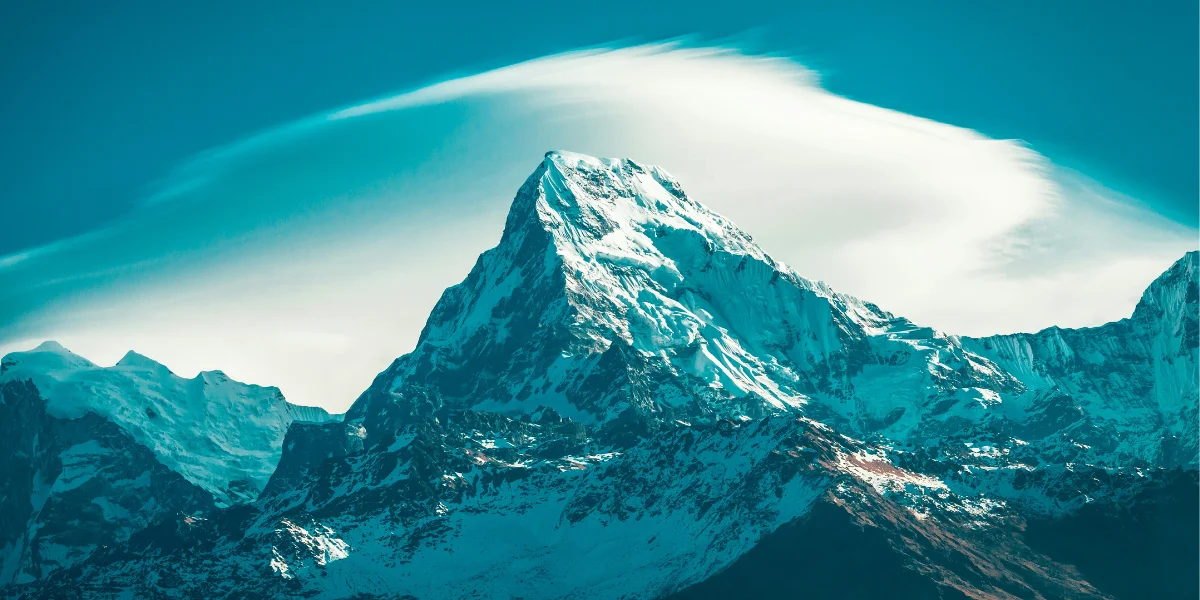
Mount Annapurna, just hearing the name, gives chills to even the most experienced climbers.
Annapurna I, a mountain that rises 8,091 meters in the north-central region of Nepal, is beautiful but savage. It is not as high as Mount Everest but much more dangerous. Due to this, Mount Annapurna I is the deadliest mountain in the world.
Annapurna looks serene and grandiose, distant, covered with clouds and snowy ridges. On its slopes, but as on the other hand, erratic weather, sheer ice walls, and ever-present danger come into play.
The smallest step is important; it is a question of life and death. Climbers say that not only is skill tested when one climbs Annapurna, but survival as well.
The conquest of this Himalayan giant has been trying to be done by various people over the years. Nevertheless, the risk does not stop beauty, and beauty and danger tend to go together captivating expeditions of wilderness all around the world through Annapurna I.
Mount Annapurna Location and Facts
Mount Annapurna I is located in the Annapurna range, north-central Nepal, in the Himalaya. The name comes from the Sanskrit words Anna (food) and Purna (full), which translates to Goddess of Harvest, or Full of Food.
She is worshipped in Hindu mythology as a goddess who feeds everyone, which is rather created with contrast to the lethal image of the mountain.
Annapurna is the 10th-highest mountain in the world, 8091 meters (26,545 feet) above sea level.
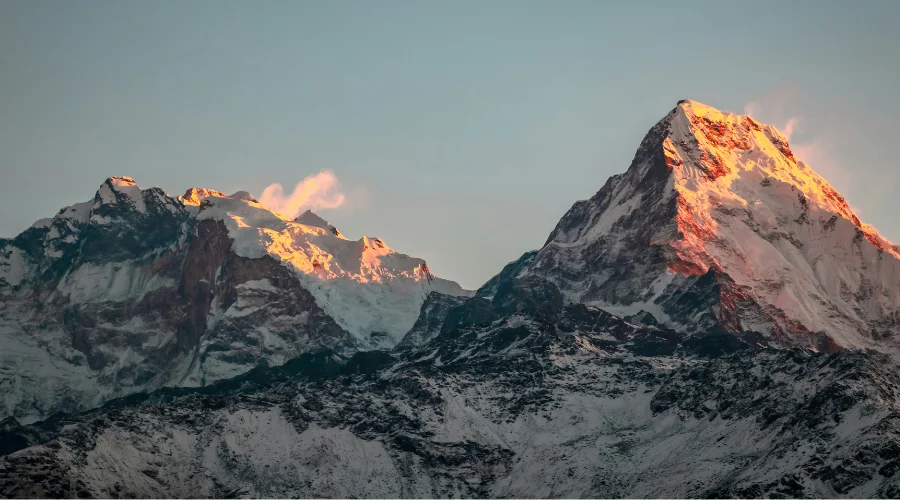
In 1950, the first 8,000-meter summit was achieved by the French expedition of Maurice Herzog and Louis Lachenal, long before Everest was summited.
This area includes several great peaks: Annapurna I, II, III, IV, Gangapurna and Annapurna South. The 55km range covers the Annapurna Sanctuary, a natural amphitheater of snow-capped mountains, and it is home to thousands of trekkers every year.
The vicinity of Annapurna boasts some well-known trekking trails like Base Camp Trek and Annapurna Circuit: two of the most popular Nepal expeditions.
Whereas the lower trails are accessible to trekkers, the upper slopes are home to a stark and silent, harsh world as well as unpredictable.
Mount Annapurna Death Rate
Not only is Annapurna a beautiful place, but it is also notoriously lethal. Annapurna has one of the highest death rates among all the 8,000-meter-high peaks.
In the past, several climbers out of every three who made it to Annapurna I had never come back.
The death rate of Annapurna is approximately 30-33%, which made this mountain have the name of the killer mountain.
As of 2025, 395 people have climbed Annapurna, and 75 climbers died. To this day, the mountain is still considered dangerous even with modernized equipment, weather prediction, and climbing skills.
The high altitude, steep slopes, avalanches that occur most of the time, and the weather contribute to the high fatality rate. All experienced climbers take a lot of chances with every step on the slopes of Annapurna. It is not a recreational event but a fight, not to die.
Unpredictable and Bad weather Conditions
A significant danger in Annapurna is the weather. The storms may suddenly break out, throwing snow, sweep, and ice. Climbers can get stuck on their way and spend hours or days in the air.
The rapid transformation may make slopes hazardous by making them icy and unstable thus increasing the chances of slips, falls, and frostbite. Even professionals indicate that the mountain appears to change its mind every hour.
Risky Technical Climbing Routes
Not only is Annapurna high, but it is very technical as well. Ice walls, overhangs and the face of the rocks involve extreme skill on the upper hand.
South Face is one of the most difficult climbs ever in the world; a slip, wrong foot, or wrongly placed rope may be lethal.
Compared to Everest, and its many set ropes and highways, Annapurna challenges their climbers to make decisions on the spot in the most difficult circumstances.
Mount Annapurna Avalanche
There is always a constant threat to avalanches in Annapurna. Steep slopes and high amounts of snow predetermine the almost inevitability of avalanches when falling ice and snow hit unexpectedly.
The avalanches have been the number one cause of death, and tens of climbers have been killed throughout the decades. They cannot always be anticipated or avoided by even the most cautious teams; the mountain appears to determine its own pace.
Limited Rescue option and Remote location
Annapurna is remote in terms of accessing big cities and emergency services. Helicopter rescue is generally not possible due to the altitude, weather, or even the territory.
In case climbers are trapped, they may wait hours or days waiting to be rescued, and they largely depend on themselves. Such distance is another element of threat: minor errors may turn out to be fatal in cases when help is unavailable.
Short Summit Windows and Rapidly Changing Conditions
Compared to other peaks, when some additional days could make it possible, the maximum number of days spent by Annapurna is just 2-3 days.
Go early, and it snows, or it blows you away, go late, and it is almost impossible to descend, due to exhaustion, and worsening conditions.
The consequences of numerous deaths occur during the descent when the climbers are fatigued and run out of oxygen, and when the weather conditions are not stable. Timing, according to even old-timers, is everything; you can die from one misjudgment.
Extreme Altitude and the Death Zone
The height of Mount Annapurna is 8,091 meters above sea level. This is the range that takes the climbers into the death zone, where the body cannot recuperate on its own. The amount of oxygen is threatened and therefore even the simplest movements get tiresome.
There is always the risk of altitude sickness, hypoxia, frostbite, and pulmonary edema. A good number of climbers have two-tailed and gone back due to lack of cooperation by their bodies.
A few wrong steps, falling or inability to keep pace with yourself at this elevation is life or death.
Mental and Physical Fatigue
Annapurna is not a mere mountain; it is a journey of mental and physical intelligence. Climbers also climb with heavy equipment over long tedious routes. They must struggle with the cold, wind and a lack of oxygen always.
There is a lack of sleep and the prevalence of hunger. Nerves are strained to the uttermost. Mental exhaustion may make erroneous decisions, particularly in sharp ridges, or on icy mountainous areas. This has been undermined even by the veteran climbers, and previous expeditions have resulted in fatal errors.
Tragic Events at Annapurna
In 1970, an expedition led by a French group that was able to go to the top of the mountain was badly hit by frostbite, and many of the participants were lost on the way down.
Even the trekking zones are risky, as the snowstorm in the lower part of the Annapurna Circuit in 2014 claimed 43 lives of both trekkers and guides.
Several other efforts were met by death through avalanche, falls or altitude sickness.
These tragedies are not merely statistics; it is a story of people struggling with a mountain, which is very unforgiving of mistakes.
Lessons are given with each expedition however, regardless of the amount of experience you have, Annapurna requires respect, preparation, and care.
Why Climbers Still Risk Their Lives on Annapurna?
Despite all these risks, why do people not avoid Annapurna? The reason is the challenge, glory, and individual ambitions. To most climbers, Annapurna is the challenge of the test of skill and endurance.
It is not only about being at the top but being able to come out alive; it is one of the deadliest mountains on the planet.
There are climbers who are attracted by prestige. Some others want to undertake a personal adventure, challenge themselves by extreme conditions, putting the body, mind, and soul to the limit.
The mountain requires utter attention, preparation, and boldness. The feeling of accomplishment cannot be described in any other way than the way it is experienced by those who are successful.
Even guides and Sherpas put their lives under risk on several occasions. Their experience may counter danger, yet it will not do away with it. Every expedition is a gamble. However, people continue to come back because the mountain beckons to those who want adventure, glory, and self-development.
Conclusion: The Price of Conquering Annapurna
Mount Annapurna is a great piece of nature that is breathtaking, snowy ridges, high mountains, and awe-inspiring scenery. But beauty comes at a price.
Annapurna has a high death rate, unpredictable weather, avalanches, technical climbs, extreme altitude, all of which make it remain the deadliest amongst all the mountains on the planet.
One must respect, prepare and accept it as risky to climb it. It is not merely climbing to the mountain-top, of coming down again. Annapurna challenges all the skills, endurance and the courage that a climber possesses and that in the mountains, nature is always right.
To those who dream to be on its summit, the moral is simple, see it the way it is, be ready and never underestimate its hazards. Annapurna is not merely a mountain; it is an obvious representation of the thin line between adventure and survival.
FAQs
As of 2025, around 395 climbers have successfully summited Annapurna I, while about 75 have died, maintaining one of the highest fatality-to-summit ratios among all 8,000-meter peaks.
Annapurna is extremely steep, prone to avalanches, and has unpredictable weather. Its high fatality rate makes it one of the deadliest 8,000-meter peaks in the world.
Annapurna I is the most dangerous mountain in the Annapurna range.
Historically, the fatality-to-summit ratio is around 30–33%, meaning roughly 1 in 3 climbers who summit die. Modern estimates are slightly lower, around 20%, thanks to better gear and weather forecasting.
Yes. While Everest is taller, Annapurna’s fatality rate is much higher (20–33% vs 2–4% on Everest), largely due to avalanches, technical climbing routes, and unpredictable weather.
As of 2025, approximately 75 climbers have died on Annapurna I, making it one of the deadliest 8,000-meter peaks in the world.
Mount Annapurna is called the “Killer Mountain” because of its extremely high fatality rate and unpredictable dangers. Around 1 in 5 climbers who attempt the summit die, one of the highest ratios among all 8,000-meter peaks.